Fixing Overexposed Roof Tiles to Prevent Costly Roof Damage from Leaks
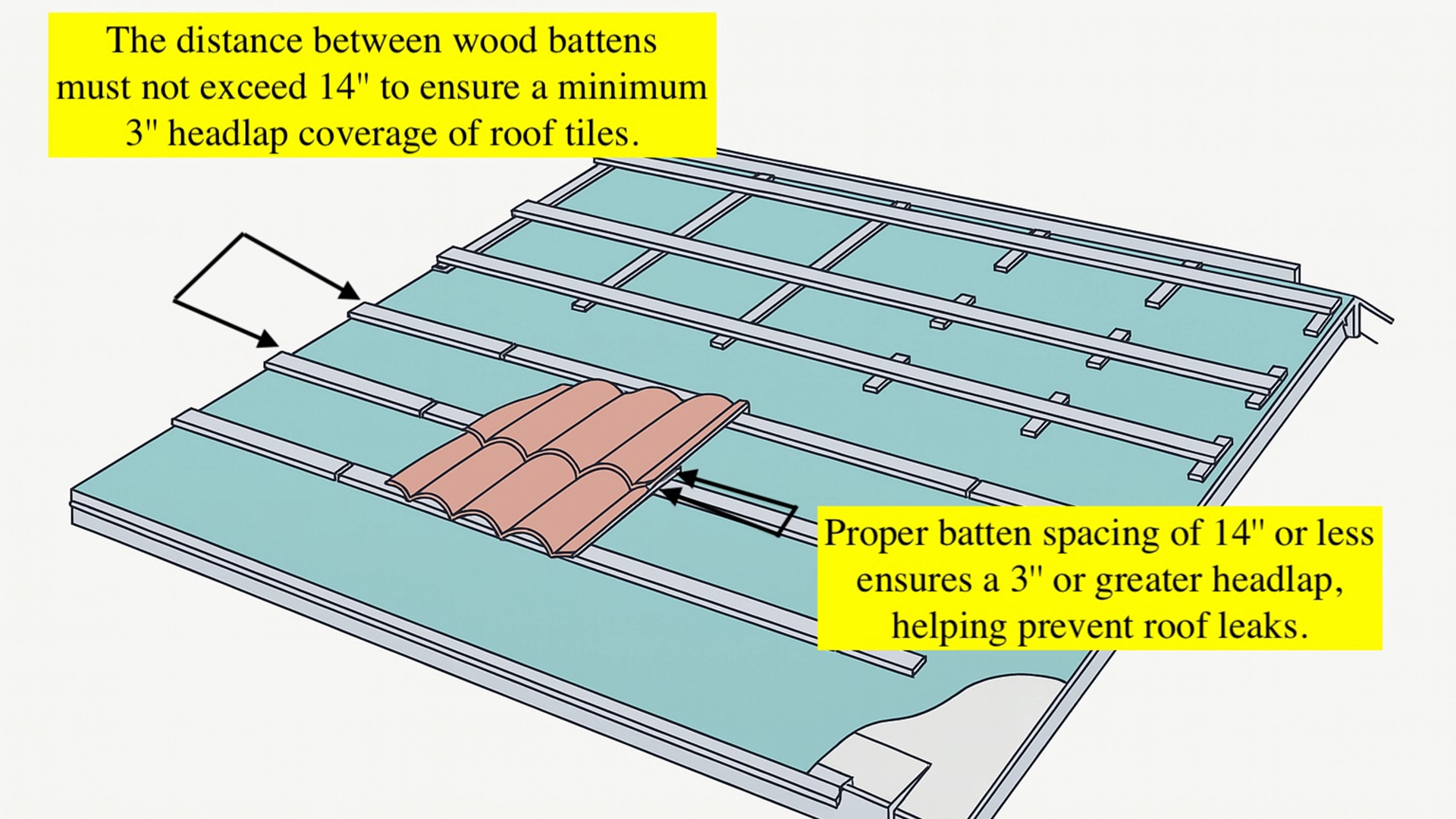
The layout of tiles on a tile roof system is composed of two main components: the battens and the roofing tiles. The battens are 1 x 2 pieces of wood fastened to the deck with nails or fasteners, designed to engage the lugs of the tiles securely onto the roof deck. When battens are properly spaced on the roof, the tiles should have a minimum 3-inch overlap. This overlap is crucial as it allows each tile to cover the one immediately below it, effectively covering nail holes on tiles and preventing water from penetrating through the nail hole. Additionally, for a roof to achieve its optimum aesthetic appeal, the area between the eave and the ridge should be divided into equal tile courses.
What Happens When Tiles Are Not Properly Overlapped
When tiles lack the proper 3-inch overlap, water from heavy rainstorms can back up and penetrate through nail holes, eventually ponding on top of the battens. This ponding water not only deteriorates the roofing underlayment but can also seep through the fasteners attaching the battens to the deck, leading to leaks and potential structural damage. If left unattended, the damage can extend to the deck sheathing, joists, insulation, and even the ceiling.
Reasons for Improper Tile Layout and Overexposed Tiles
Several factors can contribute to an improper tile layout, resulting in overexposed tiles:
- Inaccurate Measurements: Some roofers may not use a tape measure properly, leading to improperly installed roof battens.
- Environmental Factors: High winds during installation can shift the layout tape, resulting in stretched courses.
- Rushing the Job: In an effort to complete the project quickly, some roofers may take shortcuts by not laying out extra rows of tiles or by not double-checking measurements.
Solutions to Fix the Issue
If only portions of the tile roof have stretched courses, a full roof replacement might not be necessary. Instead, consider a partial re-roofing:
- Localized Re-Roofing: Remove all roofing tiles in the affected area and replace asphalt underlayment, battens, and sheathing that may have dry-rot.
- Proper Reinstallation: Re-measure and properly install the battens, then re-lay the tiles to ensure a consistent 3-inch overlap.
- Using Existing and New Tiles: Tiles can be re-used. If an extra row is required or new tile cuts are needed, tiles can be purchased at a boneyard if they are no longer made, or harvested from less visible areas of the roof to maintain the look and integrity of the existing roof.